
PLANT & SOIL
Below is a summary of the study and observation we did in relation to the behavior of coherent water.
PLANT & SOIL MICROBIOME
Restoring soil health using coherent water
BACTERIA IN THE SOIL
During photosynthesis, plants produce their own sugars, which are later used for their growth and development.
These explosions of growth are visible in the form of new leaves, flowers and fruits. But below the surface, beyond the view of the naked eye, another fascinating process is taking place.
View the Plant Soil Study
Soil: the intestines of the plant world
As the plant grows deeper into the soil, it releases up to 40% of those sugars into the thin layer of soil surrounding its roots. At first glance, this seems like a waste, but in reality it is brilliant. In that thin layer of soil, bacteria absorb the sugars and provide the plant with absorbable forms of iron, phosphorus, nitrogen and other essential minerals. The plant cannot extract these compounds from the soil itself, so it enters into a symbiotic relationship with bacteria, exchanging sugar for absorbable forms of essential nutrients.
In many ways, soil bacteria act as an extension of the plant’s digestive system and play a crucial role in the plant’s health, just as gut flora does for our own health.
Coherent water promotes bacterial diversity
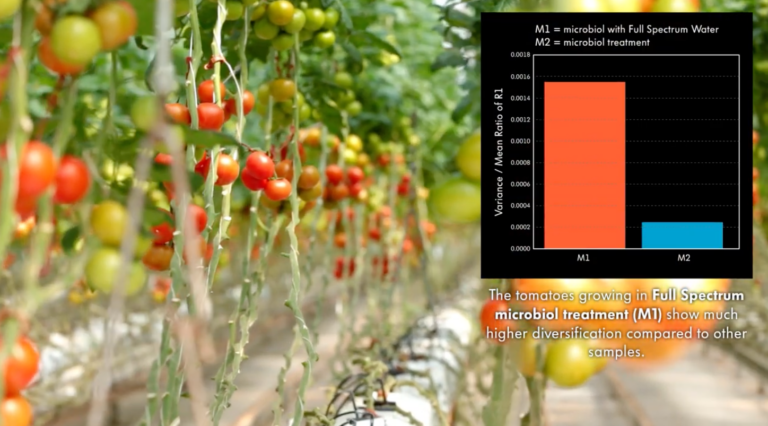
In 2021, we conducted a study on cherry tomato plants that were watered with either tap water or coherent water over a period of four months. We then analysed the bacterial diversity of their soil. The analysis was carried out using DNA sequencing, an advanced method for screening biological samples for the presence of specific genes, known as marker genes.
First, the DNA was extracted from the soil and then screened for the presence of a gene called 16S. By counting the number of copies of the 16S gene in a soil sample, we were essentially able to determine the number of different bacterial species present – a parameter known as bacterial diversity.
The study found that bacterial diversity was significantly higher in the soil of plants watered with Coherent water. This result was particularly striking given that the soil used in the study had previously been extensively treated with glyphosate, a substance known to have a negative impact on soil bacteria.
Positive effects on the nitrogen cycle
In addition to the bacterial diversity, we used the same soil samples to analyze their chemical composition. This revealed another striking difference in the soil that was watered with the stable coherent water compared to plain water. Three parameters related to the nitrogen cycle were significantly changed, indicating that the total nitrogen content in the soil increased and became more available to plants.
This result can be attributed to soil microorganisms. Although soil naturally contains sources of organic nitrogen, this nitrogen usually exists in inactive forms that cannot be directly utilised by plants. This is where bacteria come into play. They convert inactive nitrogen into nitrates and ammonia, which the plant can break down as food and use for the synthesis of its own proteins.
Watering plants with stable coherent water led to increased bacterial diversity, and these bacterial communities appear to have produced more nitrogen. This process, known as mineralization, is essential for soil fertility and affects all aspects of plant growth and ultimately food production.
The path to sustainable and regenerative agriculture
The increase in bacterial diversity and the altered nitrogen cycle point to a powerful effect of coherent water on soil fertility and productivity. It is astonishing how something as simple as revitalised water can make such a huge difference. This combination of simplicity and efficiency places Analemma at the heart of the agricultural revolution and the regeneration our planet so desperately needs.