
Why coherent or structured water?
Unraveling the mysterious power of water
Water is often taken for granted – it rains from the sky and flows from faucets and showers.
It is generally believed that water is a problem only in poor countries due to excessive solar radiation and population pressure.
Moreover, many believe that in the Netherlands we have the cleanest drinking water in the world.
Experimental research, however, shows that water is more than a simple chemical formula.
Water is an energy carrier with a “memory. If this energy cannot flow freely, it loses its vitality.
In other words, the key to health and a clean environment lies hidden in the mystery of water.
The importance of free flow for water vitality
The search for the secret of water begins in the mountains, where water begins its journey along ridges and headlands. Along the way, it absorbs and dissolves all kinds of substances. What was once a raging mountain stream turns into a river from which we drink – though not directly. We store it in reservoirs, treat it with chemicals and force it through pipes. The water that once flowed freely now enters our system, albeit “hygienically,” but trapped.
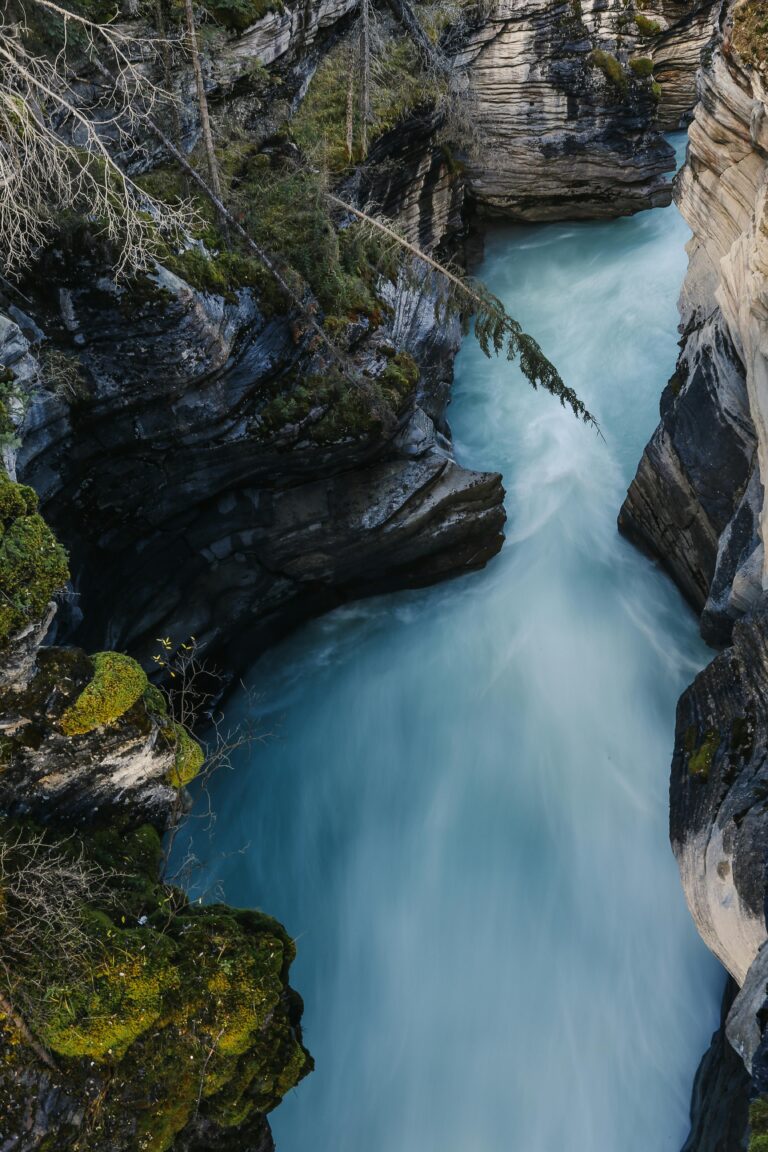
Water experts have warned for centuries that we harm ourselves when we deprive water of its free flow. If water cannot flow freely, it loses its life force. The brilliant Austrian inventor Viktor Schauberger was one of the first to recognize the importance of free-flowing water. He studied the movements of water and understood, for example, how trout swim against waterfalls. Schauberger saw that water always moves in eddies and spirals, choosing the path of least resistance. He saw fish dying in water held back behind dams.
Schauberger’s contemporary, Professor Felix Ehrenhaft, calculated that the force of implosion is 127 times stronger than that of explosion – a force we can feel when we put our hand on the drain of a draining bathtub. Nature follows the sustainable path of implosion rather than the wasteful path of explosion and combustion, as is the case with modern engines. When Schauberger died in 1958, he left behind a wealth of ideas and inventions.
Fortunately, Grander continued Schauberger’s work.
His ideas were further developed by Austrian mountaineer Johann Grander.
This gentle scientist often spent time in his old copper mine or wooden hut, surrounded by state-of-the-art equipment such as a giant light microscope. Here he accidentally discovered the secret of revitalizing water, although he had not originally been looking for it at all.
Granders miracle water
In 1982, Grander invented a special motor that consisted of magnets that continuously activated each other. This groundbreaking technique generated a natural magnetism, causing energy to flow out of the device. To capture this energy as well, he turned water into a battery.
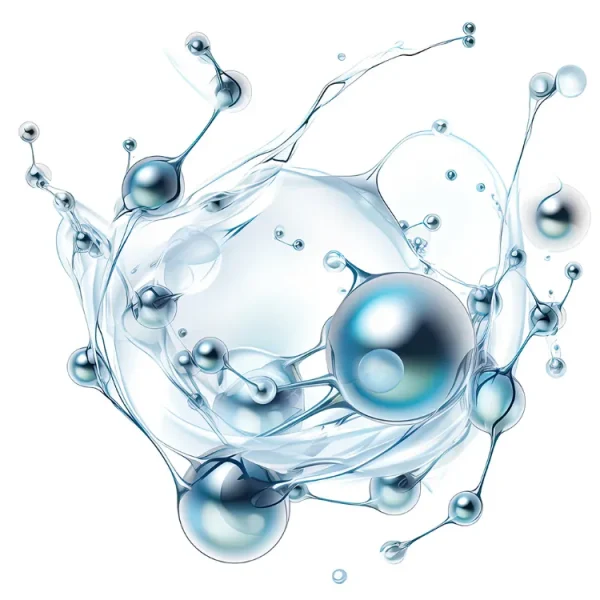
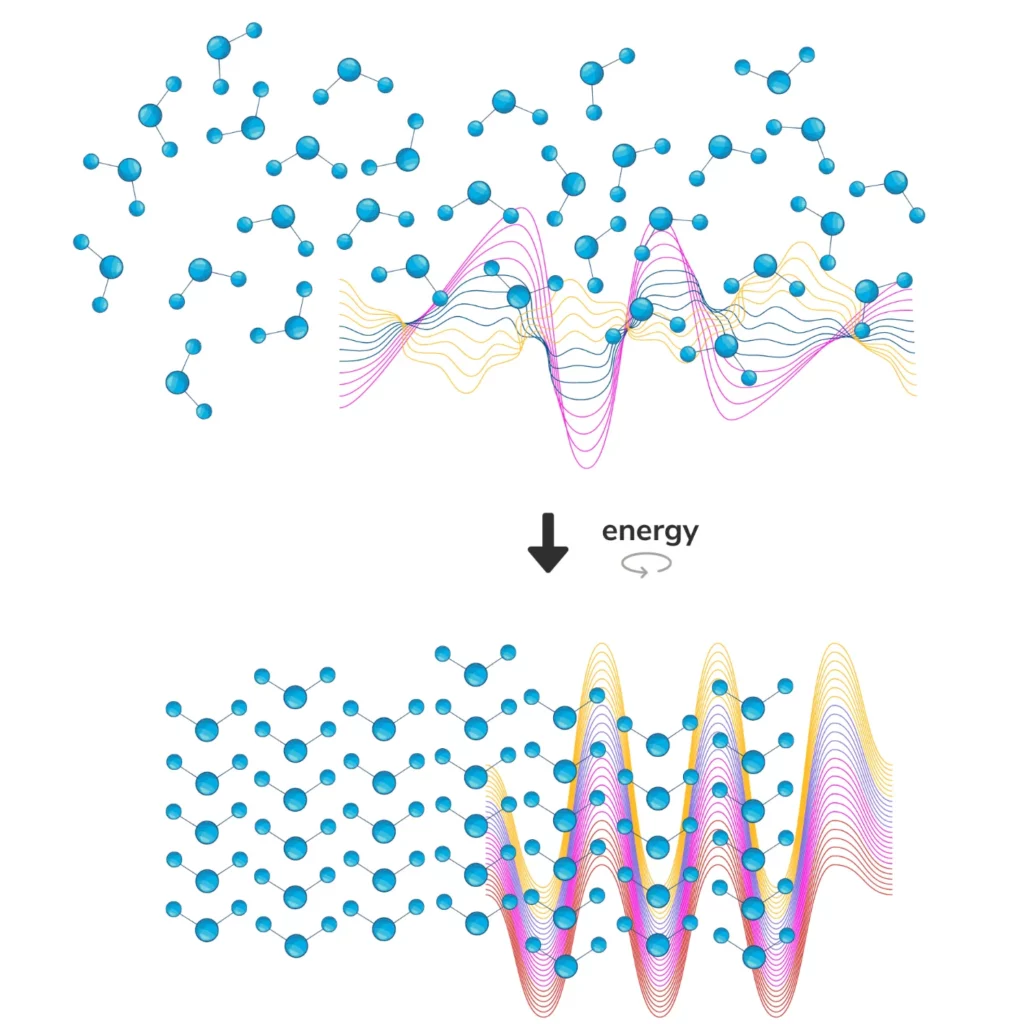
In tests with this battery, he discovered that high frequencies of about 100,000 Hz could be transferred to water. We know today that energy in water is stored in clusters, that is, groups of water molecules that coalesce into crystal-like structures.
These structures change depending on the type of energy the water absorbs. Grander’s charged water was found to be not only energy-rich, but also beneficial, bactericidal and mild-tasting.
Discoveries about the energetic power of water
English professor David Schweitzer did pioneering work by capturing the different energetic forms of water on photographic plates. Johann Grander did not have the technical means to do this at the time, but he could feel the power of his charged water.
However, Grander was not the first to discover that high-frequency water possesses healing properties. An Italian study showed that water from so-called “magical” places such as Lourdes, Fatima and Medjugorje contains high electromagnetic frequencies. Could the miracles that took place there be partially attributed to this “miracle water”?
The Italian researchers made another remarkable discovery: The high frequencies of the water from Medjugorje were spontaneously transferred to ordinary tap water from Milan. This happened not only when the water samples were mixed, but also when they were placed close together. So water appeared to be able to transmit and receive frequencies.
The secrets of water revealed: how 'living' water revitalizes 'dead' water without losing energy
Grander further observed that his “living” water had the ability to re-energize “dead” water. Interestingly, this was not at the expense of the vitality of the living water itself. Grander therefore concluded that it was not energy but information that was being transferred. When the dead water came into contact with the high-frequency water, it “remembered” its own high-frequency state, so to speak, and began to vibrate again at this level, thus reorganizing itself.
Water as a carrier of information: the science behind an ancient mystery
For more than two centuries, the idea that water can carry information has fascinated scientists and naturopaths.
This controversial theory is the basis for homeopathic treatments, in which substances are diluted so much that they are no longer detectable at the molecular level.
Yet the essence of the original substance seems to be preserved in the form of energetic vibrations.
The breakthrough in Benveniste's work
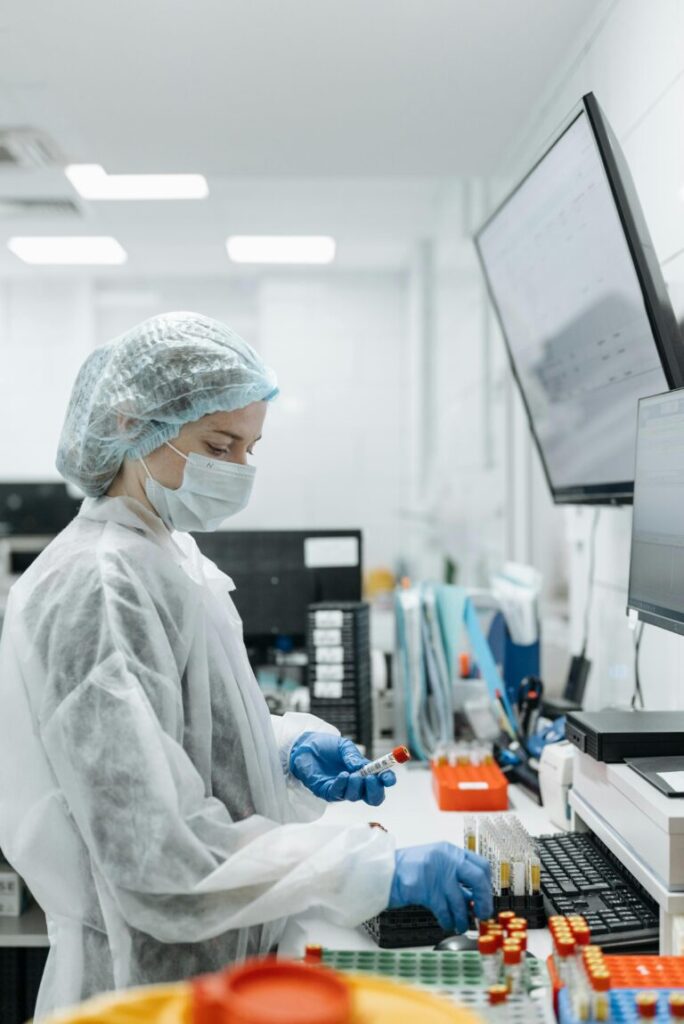
The turnaround in thinking about water’s ability to store information owes much to French professor Jacques Benveniste. In the late 1980s, he demonstrated that water behaves like a kind of liquid tape recorder. Under very strict scientific conditions, he proved that water is capable of storing and transmitting electromagnetic vibrations. Benveniste showed that water possesses the “memory” of molecules that have been completely filtered out and are therefore no longer measurable. This means that water retains a kind of imprint or stamp of the molecule with which it comes into contact. Even when the original molecule has completely disappeared from the water, the imprint – and thus the vibration – is retained.
The implications of his findings are far-reaching. Modern water purification systems appear to be inadequate; although gross contaminants are filtered out of the water, the vibrations of the substances once present in the water remain. Researchers such as physicist Wolfgang Ludwig have shown that these electromagnetic frequencies still affect our bodies even when the pollutants are no longer physically present. This raises questions about the quality of our drinking water and about the possible health risks arising from the information left in our water.
Luc Montagnier: Does water make DNA teleportation possible?
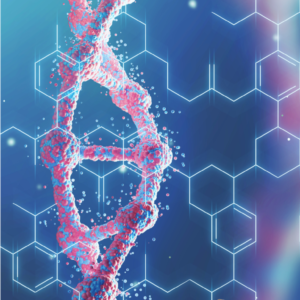
Luc Montagnier, a French virologist and Nobel laureate, has also contributed to research on the properties of water. His experiments focus on the possibility that water not only stores information, but can also transmit it. Montagnier discovered that when DNA was diluted in water to a point where no molecule was measurable, the water was still able to transmit a signal that matched the frequency of the original DNA. This went so far that when the electromagnetic information from this water was transferred to another laboratory, that laboratory was able to reproduce the same DNA code with 98% accuracy.
Montagnier’s results suggest that water has a form of memory beyond our traditional understanding. He used advanced techniques such as electrophoresis to detect these signals and suggested that this mechanism may play a role in biological processes such as healing and communication between cells. His work has led to much discussion within the scientific community, particularly about the implications for our understanding of biology and health.
Hans Kronberger: champion of water quality
Hans Kronberger, Austrian MEP and journalist, has been working for years to raise awareness about the quality of our drinking water. Although initially skeptical of claims about “living” or “enriched” water, Kronberger decided to investigate the effects himself. What began as curiosity led to a thorough investigation of various methods of water purification.
Kronberger collected data and spoke with numerous scientists before publishing his findings in his book Auf der Spur des Wasserratsels. His experiences show the importance of being open to new ideas about water and health. He advocates for a broader understanding of water in our society and emphasizes that scientific evidence is not always comprehensive.
Kronberger points out that many scientists cling to traditional ways of thinking that stifle innovation. He firmly believes that more research is needed into alternative methods of water purification that will help us improve our health and well-being.
Renewal through coherent water
Stable, coherent water offers a unique approach that goes beyond conventional water treatment methods. It is the method that ensures water remains structured after treatment, even when exposed to electromagnetic radiation.
The result is coherent (and stably structured) water that retains its unique properties under different conditions. In contrast, with other methods, water decays into a chaotic state within 30 minutes to 3 days.
Moreover, this water offers the only treatment method that has actually been proven in independent, double-blind, placebo-controlled clinical studies. These studies have demonstrated numerous health benefits for people, plants and soils. The results indicate improved hydration, increased nutrient uptake by plants and an overall improvement in the health of users. This makes stable, coherent water not only innovative, but indispensable to a healthy lifestyle.
Conclusion:
The future of water
The discoveries about water are downright revolutionary, opening new vistas for health and well-being.
From Benveniste’s groundbreaking work to Montagnier’s experiments with DNA information in water, there is a growing realization that water is much more than just H₂O.
Stable, coherent water represents a major step forward in the quest for healthy drinking water.With ongoing research, innovative thinkers open to other paradigms (such as Hans Kronberger) and innovations like Analemma Water, we hope for a future where we not only understand what is happening to our water, but also how we can use it for our health.
The way is clear for further exploration of the secrets of water and its potential as a source of life and well-being.
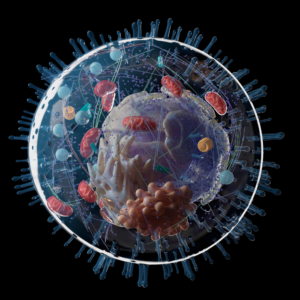
Nuclear power plants
of our cells:
Mitochondria and their crucial role in health and well-being
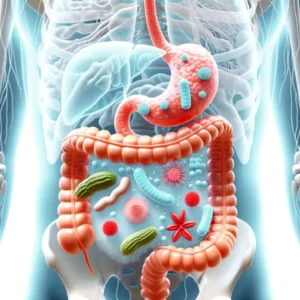
The second brain:
The intriguing world of the intestines
Gut health is a complex and fascinating topic that has a profound impact on our overall well-being. Learn about the role of the gut as the “second brain,” the important communication bridge between the gut nervous system and the brain, the importance of healthy gut flora.
Why is water so important?
“Water is the antenna; receiver and transmitter. The quality of the body’s own water determines all the functions of all organisms.”
In this Dutch-language interview, Eric Laarakker explains recent scientific discoveries in the field of water.